MoldiBlocks
Why build it?
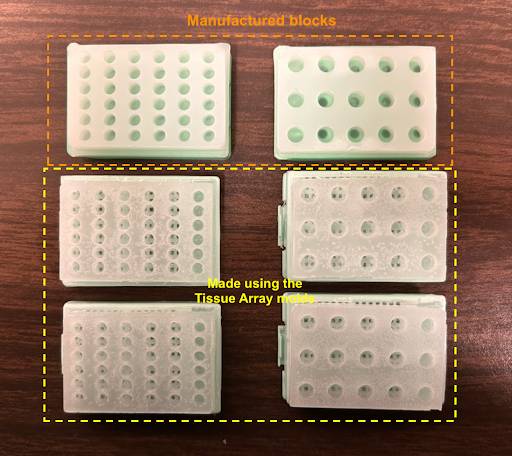
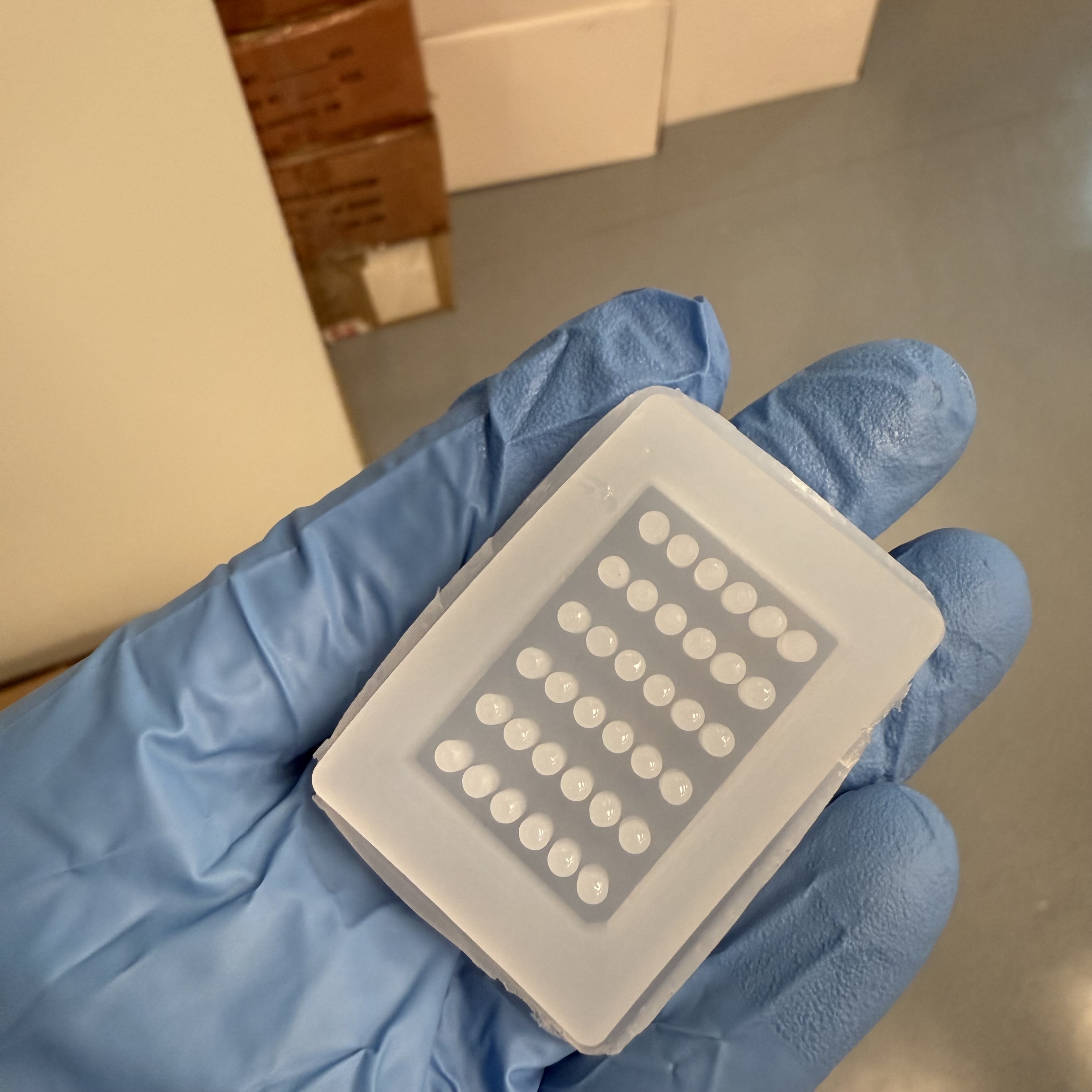
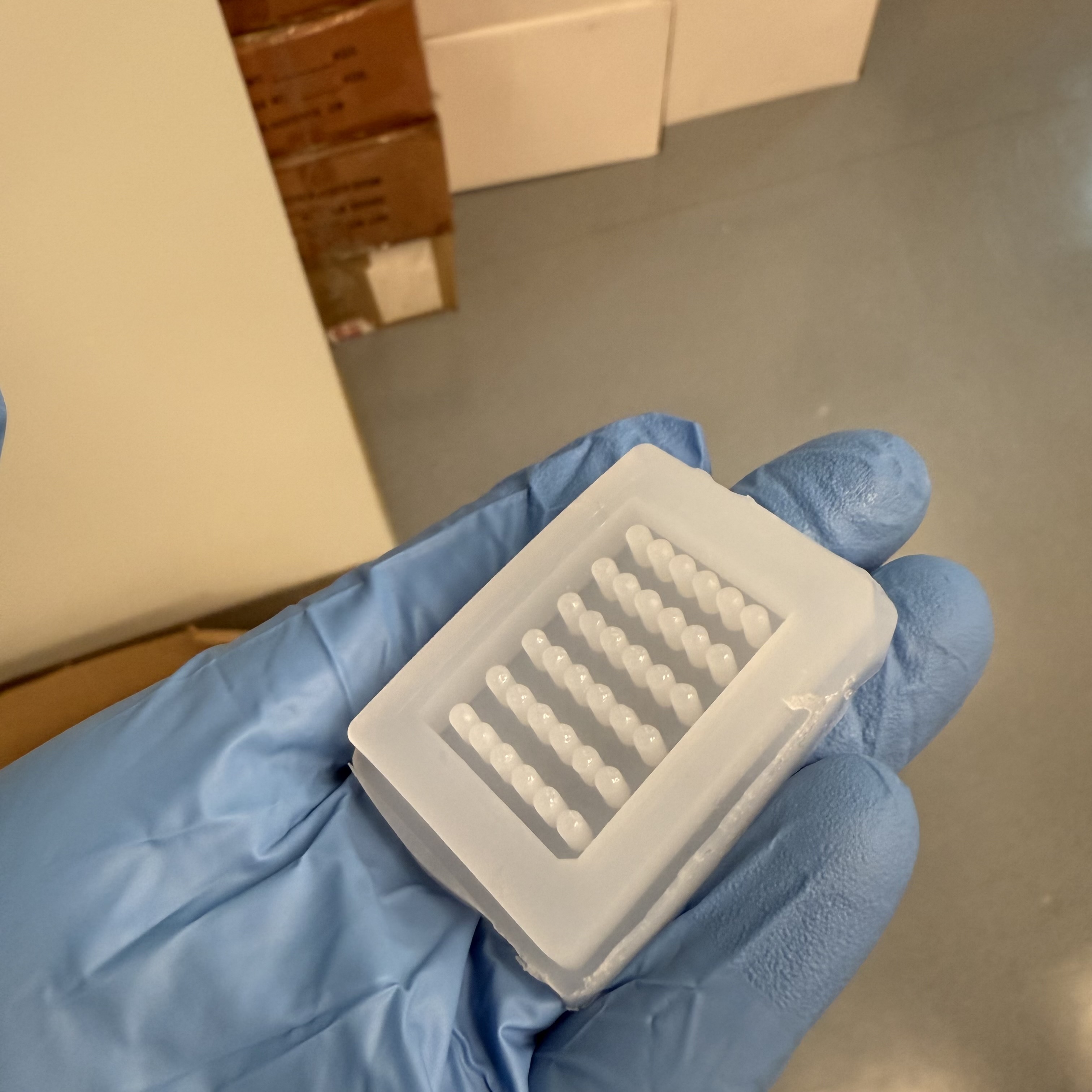
Commercial silicone molds for tissue microarrays are expensive and limit experimentation, particularly for smaller or early-stage research projects. A PhD researcher at UC Davis asked whether a lower-cost alternative could be fabricated using accessible tooling. MoldiBlocks began as an effort to reduce the cost of TMA workflows while developing a repeatable approach to fabricating reliable lab-grade silicone molds.
System concept
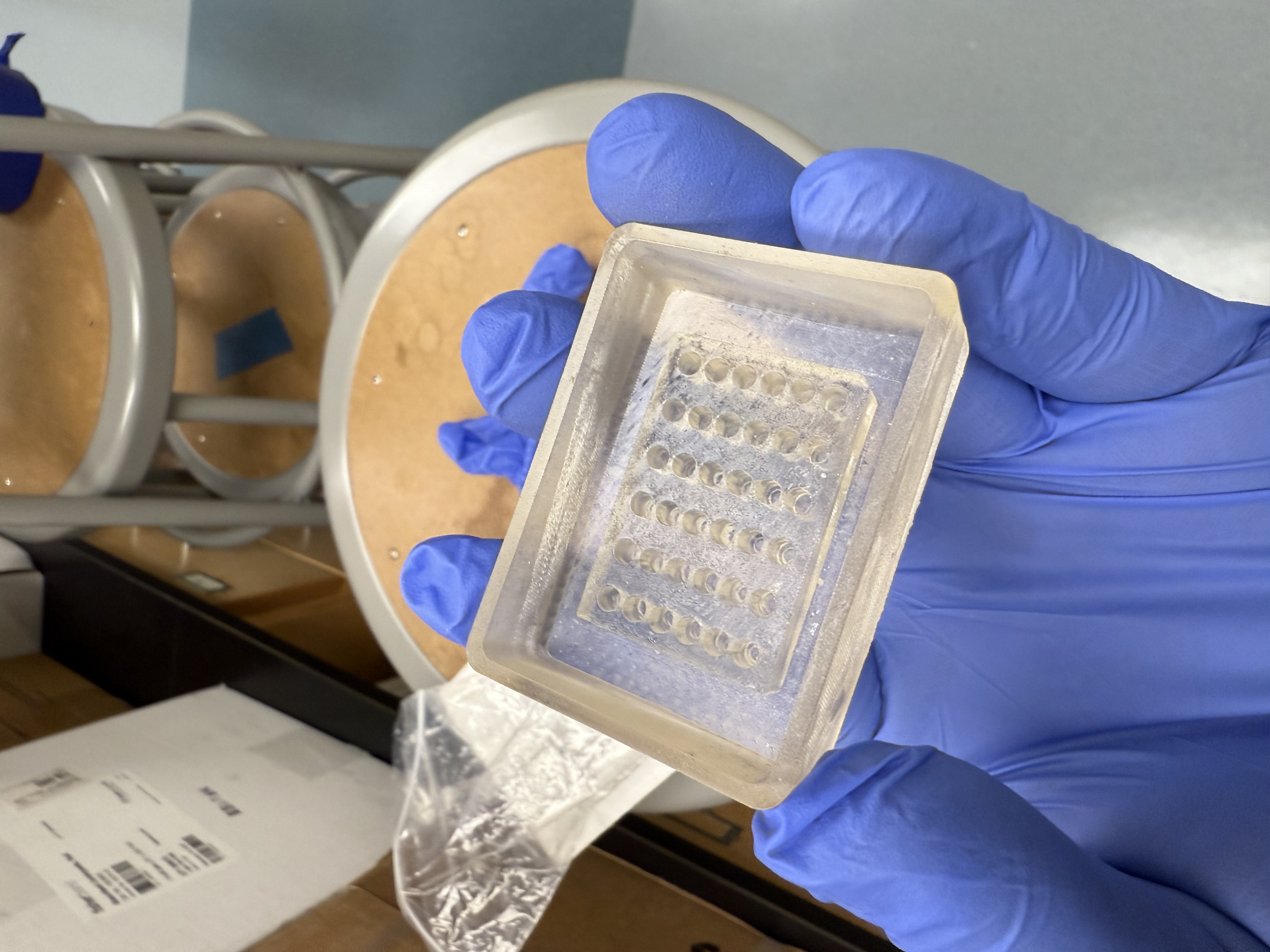
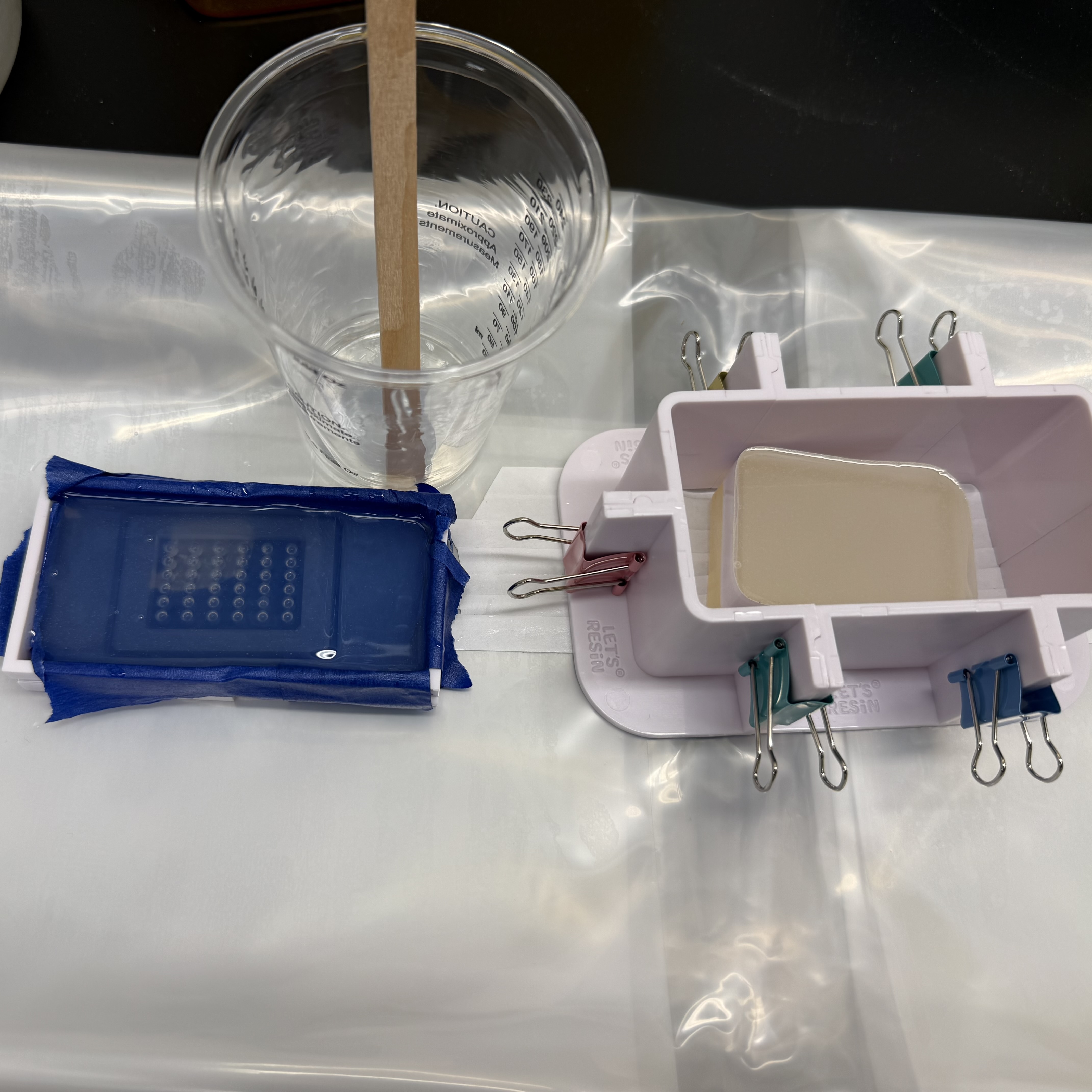
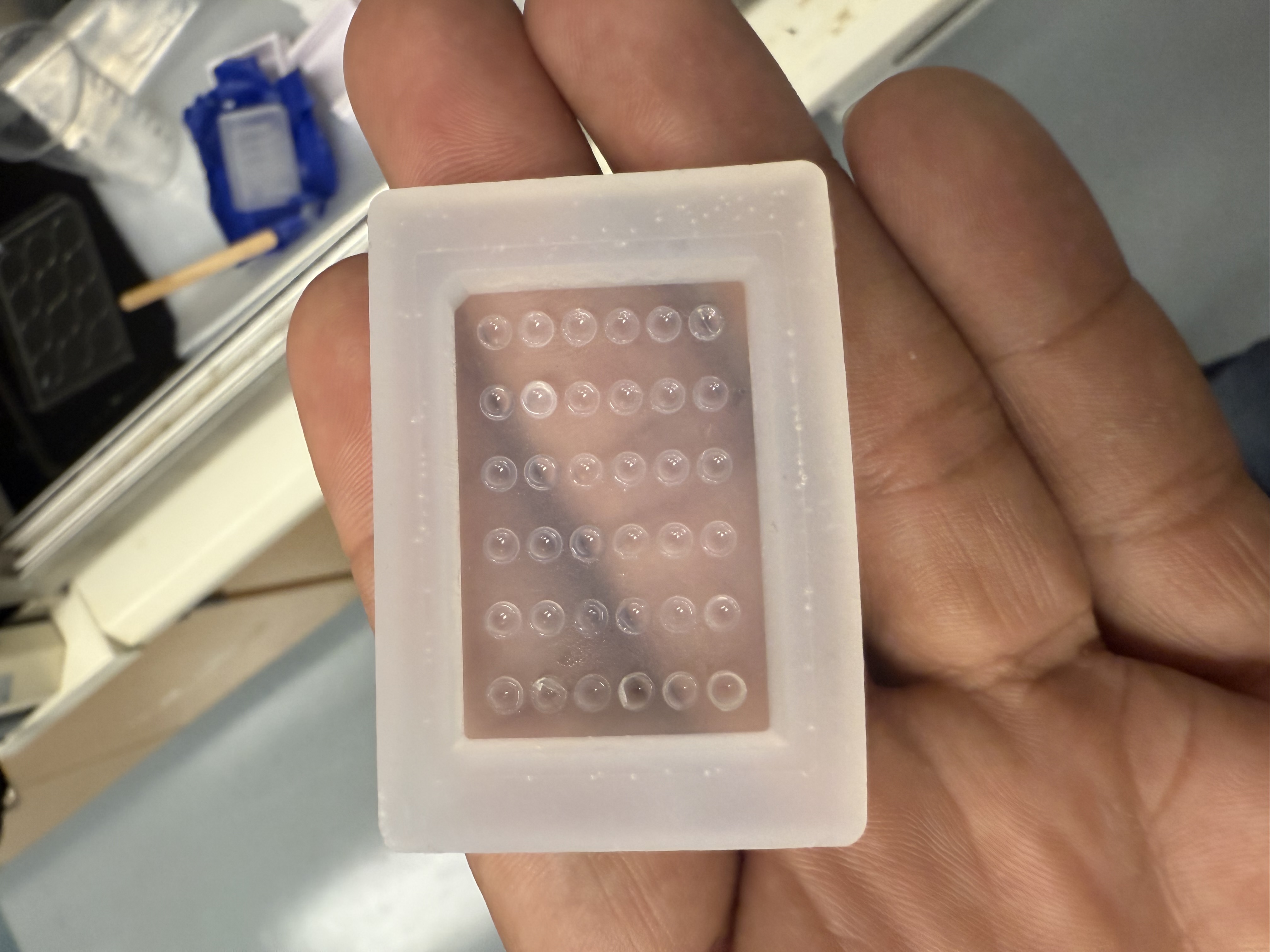
MoldiBlocks uses a reusable SLA-printed master mold to cast flexible, platinum-cured silicone trays compatible with standard tissue core dimensions. The master is fully post-cured prior to casting to prevent silicone inhibition. Platinum-cure silicone is then poured, degassed, and demolded to produce a reusable tray suitable for repeated experimental use.
Tools & materials
- Shapr3D for CAD
- Elegoo Saturn 2 (ABS-Like V3 resin, transparent)
- Let’s Resin 15A platinum-cure silicone rubber
- EZ Release mold release
- IPA wash station and UV cure station
- Syringes for controlled pours
- Vacuum chamber for silicone degassing
Awards / Recognition
- Accepted into SFSU IncuGator.
- 2nd Place, Engineering and Pitch Competition.
- 1st Place, Innovation Pitch.
- 3rd Place, Health and Wellness Track, CSU Sunstone Startup Launch Pitch Competition.
Early learnings
- Post-curing is critical: Residual uncured resin inhibits platinum-cure silicone crosslinking. Extended UV curing followed by warm-air drying is required before casting.
- Degassing improves geometry preservation: Vacuum chamber degassing significantly reduces trapped air and improves feature fidelity compared to syringe-only filling, particularly in narrow core bores.
- Fill strategy matters: Controlled filling combined with degassing yields more consistent core geometry and fewer defects across the mold.
Current Development
MoldiBlocks is being developed through NSF I-Corps customer discovery as an active product exploration in accessible biomedical research tooling. The work focuses on understanding how research and educational environments approach histology, microscopy, tissue microarray construction, training, and tool access.
Discovery areas include:
- Histology and tissue microarray workflows
- Biomedical research training environments
- Shared research facility constraints
- Hands-on tooling for academic labs
- Access, reproducibility, and workflow friction
Current Status & Next steps
- Actively testing molds designed for 2 mm tissue cores, with plans to expand to additional core sizes.
- Iterating on a second-generation master with refined tolerances and improved demolding behavior.
- Validating durability through repeated paraffin wax pours.
- Exploring silicone pigmentation to visually distinguish silicone molds from paraffin blocks during handling.
- Investigating removable trays or ejector mechanisms to reduce mechanical stress during sample removal.